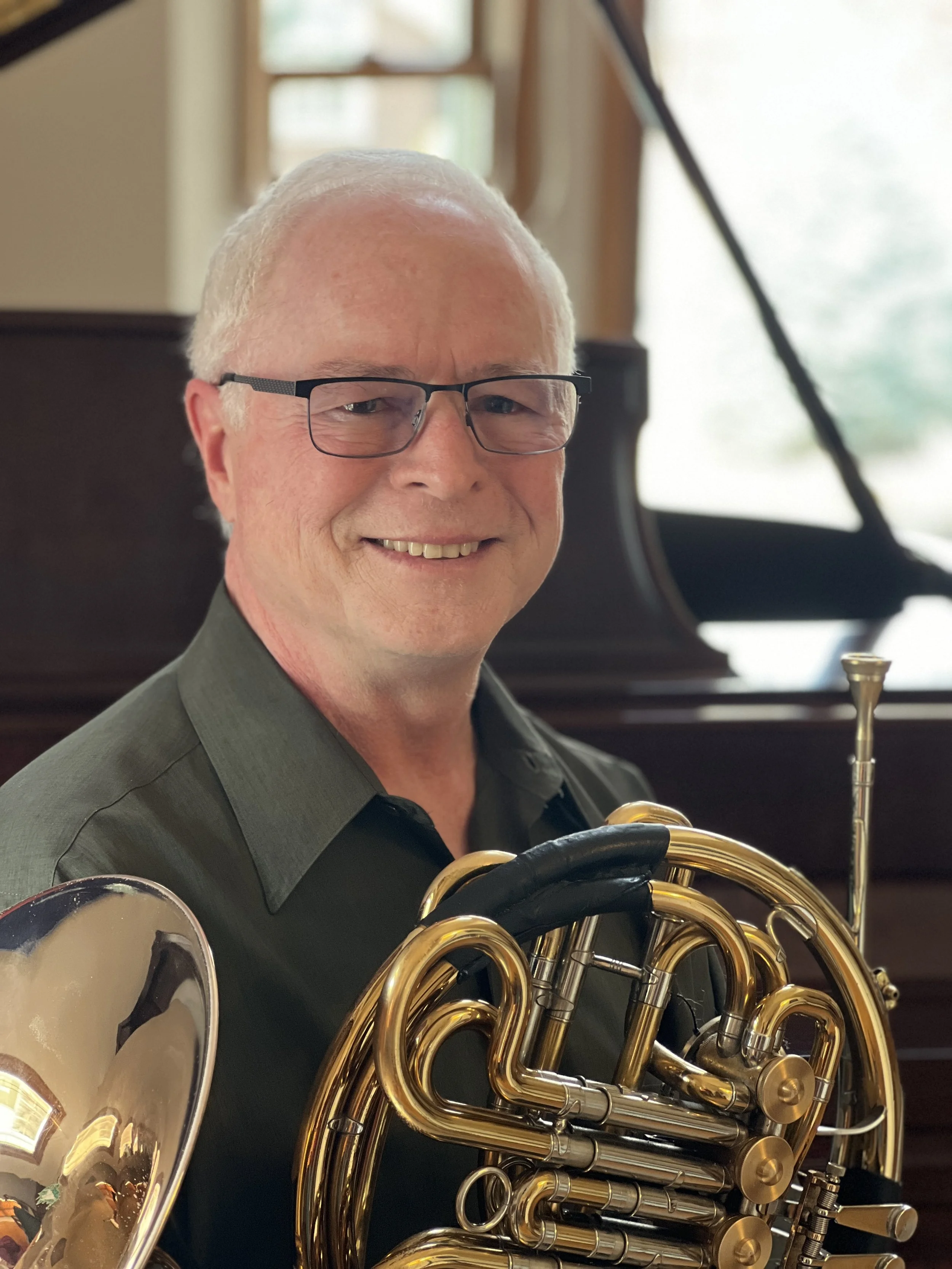
MOTM July 2026: Cindy "Boomer" Haraway

July’s musician of the month is Cindy “Boomer” Haraway, FCWS founder and long-time clarinetist with the FCWS (over 30 years!). In addition to founding our ensemble, Cindy has been an integral member of the Fort Collins classical music scene in numerous ways. She graduated from Colorado State University with a music education degree, played 2nd clarinet in the Fort Collins Symphony as well as served on their board of directors for many years, and even started our local music supply store, Boomer Music Company. Cindy remains an active member of the FCWS board of directors.

What does music-making mean to you personally, and what drove you to establish the FCWS?

Making music is magic, it brings so much to my soul. Like so many wonderful endeavors, the FCWS was born from friendship and vision. Jana Thomas, Clint Baker, Bill Runyan, and I co-created a high caliber performing ensemble to meet the needs of musicians in the area.

How have you spent your time outside of FCWS — professionally and/or musically — and how does it connect to your life as a musician?

As the founder of Boomer Music, my entrepreneurship was a full time job. Focused on bringing resources, equipment, and connections to musicians in the Front Range, Boomer Music helped build and maintain connections in the creative community.

What's a piece of advice you'd give to a younger musician just starting out?

Music opens up the world; making music with friends brings immeasurable joy. Private lessons, practice, and pursuit of musical experiences will be a gateway to thrilling opportunities.

What do you think FCWS gives to its musicians, and what do you think it gives to the Fort Collins community?

FCWS gives musicians the opportunity to play with other high caliber performers. The FCWS, in turn, provides polished performances of Concert Band repertoire. Both of these elements in the FCWS offer a community - both to its players, and to the audience.

Is there a moment in your musical life — a performance, a teacher, a piece — that really shaped who you are as a musician?

In secondary public school, the opportunity to perform with All City and later All State Bands opened my eyes to the camaraderie of musicians, and the joy that blooms from experiencing the potential of what Bands could sound like.

What is a favorite memory of yours from your time so far with the FCWS?

The thunderous reaction and excitement from the audience after the FCWS had performed "Stars and Stripes Forever” as an encore was deeply rewarding, a capstone to a successful performance.

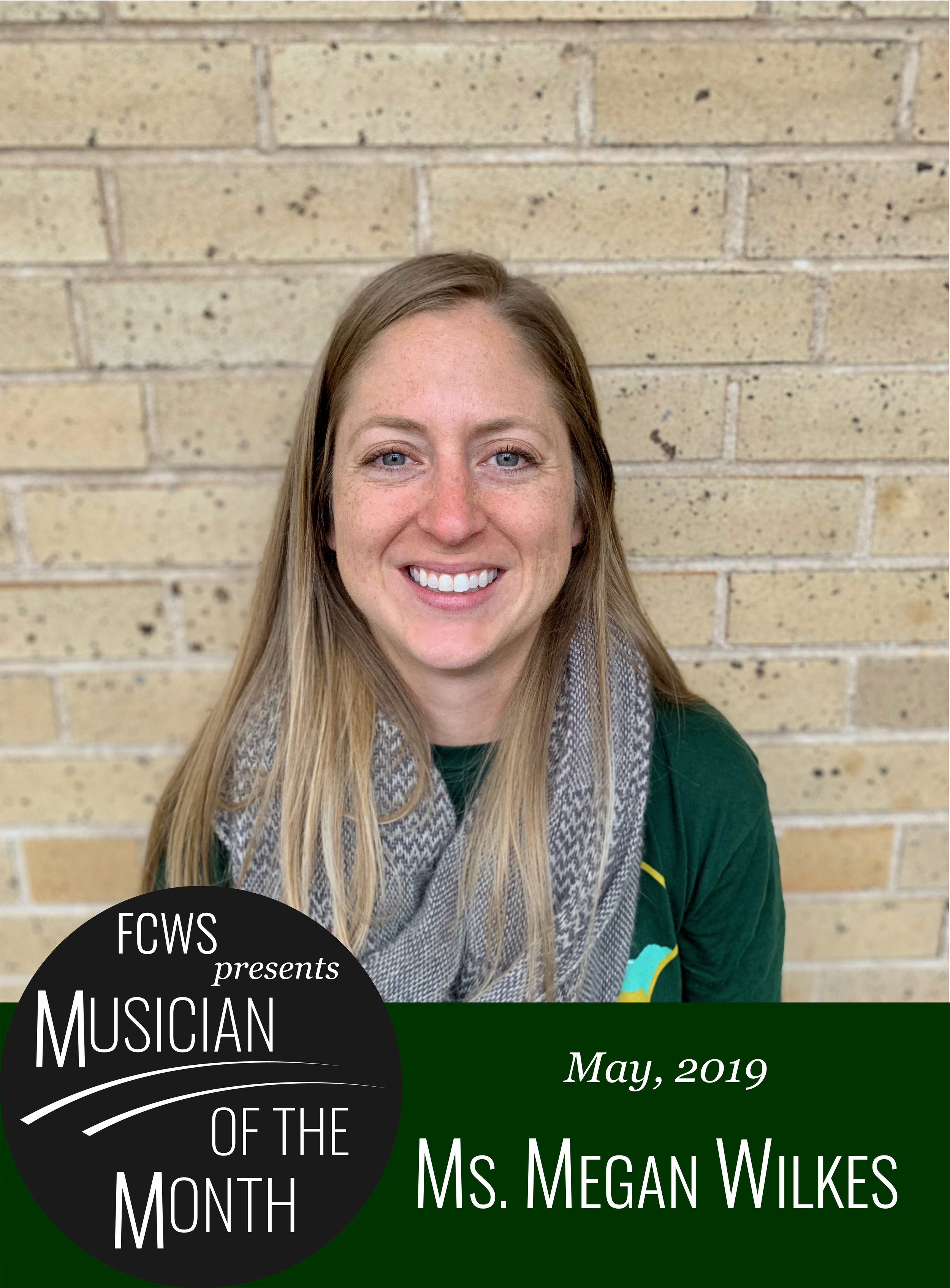
MOTM May 2019 - Ms. Megan Wilkes

Artboard 3.jpg

Hello again, friends of the Fort Collins Wind Symphony! We’re back with our final edition of the Musician of the Month, and to celebrate our great 2018-2019 season, we are featuring our very own President of the Board, Ms. Megan Wilkes!

Megan as been with our organization for a few years and has dutifully served as president for a year. Unlike our other featured musicians, Megan is not a full time musician, but maintains performing as a critical aspect of her life. We are excited to have such a dedicated musician at the helm of this organization

We sat down with Megan to talk about her career and what she values in classical music


FCWS: In your words, please tell us who you are and the role you play in the FCWS, and then please tell us a little about your experience as a musician.

Megan: I play horn with FCWS and a few other local ensembles -- I’m not a professional musician, but a serious hobbyist. I am currently serving as president of the FCWS board. I joined the board last year as librarian to be more involved and give something back to an ensemble that gives so much to me.

FCWS: What is your career?

Megan: I have a background in statistics and worked in healthcare forecasting for over 10 years before choosing to pursue a career change into occupational therapy [OT]. I am currently 2 weeks away from finishing my OT coursework at CSU, which I am pretty excited about. I’ve met so many OTs who absolutely love their jobs and have truly enjoyed my fieldwork experiences as a budding OT. I’m looking forward to being able to work as a therapist in the near future.

FCWS: Why do you pursue music as a serious hobby?

Megan: I honestly just love making music with other people. I didn’t realize how important playing with an ensemble was to me until I quit playing when I went off to a college with no music program. After a few years of missing music, I decided to buy a horn and take up playing again. It was awful!! I knew what I should sound like and be able to do but came nowhere near that level of playing for quite a while. Thanks to a wonderful lesson teacher in Austin who specialized in “adult rehab cases” I was able to push through the awkward phase. I eventually found my way into a wonderful community group, the Austin Civic Orchestra [ACO], playing beside that same lesson teacher.  I remember working on Wagner’s Ride of the Valkyries in my first rehearsal with ACO. I was absolutely elated to feel like I was finally playing well alongside other musicians. I continued with ACO for 10 years before moving to Fort Collins. One of the first things I did when we were looking at moving to Colorado was to scope out local community ensembles!

FCWS: For those in the audience who were unaware, this has been your first year as president of the FCWS. What did you learn about this organization that you didn’t know before you stepped in as the president?

Megan: I am so fortunate to be a part of such a wonderful board. FCWS is a long-standing and well-run organization, and the other board members make my job as president relatively easy. Before being in this role, I wasn’t fully aware of the amount of work that goes into many of our tasks for each concert cycle: for example, creating, editing, proofing and printing our concert programs. Although the programs look similar from concert to concert, there are changes every time. Program notes must be written and proof read; the ads, donor names, and personnel lists must be updated; our printing vendor must be sent the new proofs by a certain date, etc… I’ve enjoyed gaining an appreciation for the amount of work that goes on behind the scenes to support an organization like this.

FCWS: As the president of FCWS, what sort of directions do you want to take the FCWS in the next few years?

Megan: I want to keep our audience and our musicians happy and engaged. We are honored by how much our patrons support us through excellent concert attendance and generous donations. I also love to hear from an audience member who has never been to a concert before. It’s a great sign that our audience enjoys us well enough to spread the word about FCWS. Our director, Dr. Mayne, does a wonderful job of keeping audience interest in mind while he’s putting together concert repertoire that will also challenge and excite our musicians. 

FCWS: I’m sure most musicians and fans of the symphony have heard that “classical music is dying”. Do you believe this is true? How do you engage new people to come to the FCWS?

Megan: I don’t think this is true, although people have certainly been saying it for years.  One of the many wonderful things about our Fort Collins/Loveland/Greeley community is their appreciation for the arts. I think our fantastic audience attendance at each concert is one indicator that classical music is indeed thriving at the local level. And I’ve recently started enjoying listening to Northern Colorado’s new classical music station at 88.3 FM. On a larger level, you still hear fantastic orchestral music on TV and in huge blockbuster films like those horn riffs in the Avengers movies! I feel like this continued inclusion of classical music in pop culture is a strong sign that it’s here to stay.   

FCWS: What value does a community music organization, like the FCWS, provide to its community?

Megan: In addition to providing high-quality live concerts to the community, we give local musicians an outlet for their creativity. As a member of FCWS, I’m so grateful for the opportunity to participate is such high-quality ensemble in the same town I call home. Making music with other people is a unique experience and having an outlet for that for professional and non-professional musicians alike is huge. It’s wonderful to interface with local high school students through open rehearsals – it provides a chance to show students there are options to continue playing music as an adult even if they have non-musical career interests. We showcase the talents of other local artists by choosing to feature guest artists and collaborate with composers who call the Front Range home. Lastly, we strive to remain accessible to all by not charging admission to our concerts so that cost is not a deterrent.  

FCWS: When you are not performing with the FCWS, what other avenues of music creativity do you pursue?

Megan: I enjoy playing with the Health and Wellness Community Orchestra and the Rocky Mountain Horn Ensemble. Recently I’ve also been fortunate to play with the Loveland Choral Society’s Christmas show. I played piano when I was younger and would love to get back to that someday if I can find the time.

FCWS: What is an important skill that modern musicians should have?

Megan: Social media can be a great networking tool for musicians starting out in a new location. I’ve made several connections online after playing with another musician once or twice that then turn into a playing opportunity years later. Musicians can be a pretty mobile group, so having a way to maintain those connections is helpful. 

FCWS: What does the future of classical music look like?

Megan: I think classical music will continue to make an impact on people’s lives. As long as we continue to support music programs in schools and give students opportunities to engage in choir, orchestra and band, future generations will carry forward a love of classical music. I know I’m not alone when I say I’m still grateful to the fantastic music educators I had in school. 

MOTM March 2019 - Dr. K. Dawn Grapes

201903 MOTM - Dawn Grapes-01.jpg

Hello again, friends of the Fort Collins Wind Symphony! We’re back with another edition of the Musician of the Month, and are pleased to feature one of our flutists, Dr. K. Dawn Grapes.

Dawn is an active performer in the Northern Colorado region and has served as the FCWS principal flutist for several years. When she is not performing, she is engaged in scholarly pursuits at Colorado State University where she teaches music classes and studies music history. Her history expertise is well known in the Northern Colorado region - she writes program notes for the Colorado Bach Ensemble, and hosts the “Composer Talks” lecture series for the Fort Collins Symphony. A full detail of her academic work can be found at her website.

We sat down with Dawn and picked her brain about music and the importance of music history.


FCWS: In your words, please tell us who you are and the role you play in the Fort Collins Wind Symphony, and then please tell us a little about your music career.

Dawn: Well, I am a musician, a teacher, a scholar, a wife, a mother, and hopefully a decent human being, not necessarily in that order. In the Fort Collins Wind Symphony, I serve as principal flutist, which is a pleasure and an honor. My music career has sort of taken two tracks. For about twenty years, I was primarily a freelance flutist, doing a variety of things. I played with professional orchestras in a number of states, had my own teaching studio, taught at several universities and community colleges, and was a freelance performer and contractor in Nashville. I have always had a special interest in music history, however, and about ten years ago, I decided to get my Ph.D. and travel down the academic path, and here I am today, on the faculty of the School of Music, Theatre, and Dance at CSU, as an Assistant Professor of Music History, and delighted to be surrounded by music and history every day.

FCWS: So far, we’ve featured a combination of educators, composers, and professional performers. In addition to your education and performing, you are a professional musicologist. Can you tell our audience what musicology is? 

Dawn: Musicology is just what it sounds like: the study of music. It often gets categorized as the academic side of music studies. There are a number of different sub-fields within musicology, such as ethnomusicology [the study of music within cultures], performance practice, theory, phenomenology, popular music studies, and historical musicology, which is what I do.

FCWS: As a musicologist, what is your primary area of expertise?

Dawn: My research right now mainly revolves around music and musicians in early modern England—the Tudor and Stuart eras. I try to find out and elucidate how music of the time reflected the values, beliefs, customs, and social structures of Elizabethan and Jacobean England. In many cases, though the place, time, and technology may be different, there are a lot of parallels to our present day, some four hundred years later. My latest project is on John Dowland, the “rock-star lutenist” of the early seventeenth century.

FCWS: Why is it important to understand and study the history of music, including and beyond western art music?

Dawn: Music, in some form, is practiced in almost every time and culture. In many ways, it serves as a way to tell the story of any particular group of people. Studying a people’s music can help add a dimension to understanding them. There is a who, what, when, where, how, and perhaps most importantly, why, behind every piece of music. Sometimes the answer to that “why” is complex and sometimes very simple, but it provides a lens through which to understand people who are like you and people who are different from you. What could be more important? 

FCWS: For our younger listeners, can you describe what a career in musicology looks like? What sort of professional options exist for musicologists? 

Dawn: Musicology is such a broad field. There are many different roles musicologists play, and many paths that one can take in the discipline. The most obvious is university professor, but there are other options: archivist, museum curator, librarian, writer, copyright specialist, advisor to film or television studios, editor for book or music publishing, and of course, performer, for some.

FCWS: When you’re not working on your research and teaching at CSU, you perform regularly with several small ensembles in the Northern Colorado region. Can you tell us about the other ensembles you perform in?

Dawn: I am a founding member of a flute-clarinet-piano trio called Sound de Trois, which specializes in contemporary chamber music, and I am part of a group called Hyperprism, which presents chamber recitals and takes on recording projects. In some ways playing with groups that play contemporary music balances out the early music researcher in me. I also do a lot of church gigs around town, and have a special affinity for collaborating with organists. The flute sounds really nice with pipe organ pipes.

FCWS: Is classical music “dying” in the 21st century, or is it still relevant for our culture?

Dawn: People have been bemoaning the “death” of classical music for decades. But in a lot of places, the art music world is still going strong. I do not see the end in sight. As an early music historian, of course I think older music is relevant. However, I also believe that there is room for new music, and innovation is a beautiful thing. My favorite pieces of music that fall under the “classical” label are often those newer pieces that draw from the past, but are infused with modern sensibilities. Wind music composers often understand that, which is one of the reasons I really enjoy playing with the Fort Collins Wind Symphony. In historical research, we build on what those before us have done. It is inevitable. Why not music?

FCWS: What does the future of classical music look like?

Dawn: I know better than to try to predict the future. But in this newest era of globalization, I hope that music of all kinds, art music included, brings us all a lot closer together.

MOTM February 2019 - Ms. Gabriela Bliss

Welcome back, and happy 2019! We are excited to kick off the second half of our 2018-2019 season with our February Musician of the Month - Gabriela Bliss.

Gabriela is an active freelancing musician and private instructor in the Fort Collins area. She performs frequently in the Northern Colorado region, and is a regular at the Candlelight Dinner Playhouse. If you’ve heard flute at an event, there’s a high likelihood that you’ve heard her perform! She maintains an active studio and is establishing herself as a strong pedagogical presence. You can read more about her on her website (gabrielablissflute.weebly.com).

We caught up with her recently to hear her thoughts about professional musicianship and classical music in the 21st century.

201901 MOTM - Gabriela Bliss-01.jpg

FCWS: Tell us a little bit about who you are and the role that you play in the Fort Collins Wind Symphony, and then tell us a little bit about your musical career.

Gabriela: I am Gabriela Bliss, and this is my first year as the piccolo player for the Fort Collins Wind Symphony, although I have subbed for the group in the past. I got my Master’s in flute performance from CSU, and my Bachelor’s from Northern Arizona in music performance, and this is my second year being a full time freelance musician.

FCWS: Up to this point, we’ve featured mainly music educators – plus James David, our composer in residence, if you will – but you are our first gigging musician to be featured. Can you tell us a little bit about what it means to be a gigging musician?

Gabriela: Well it’s been amazing so far, but to be a gigging musician it’s about taking gigs wherever you can. Currently I’m at Candlelight Dinner Playhouse and freelancing and doing what I can to live this life! I’ve learned so much from working with colleagues around the Northern Colorado area. And it was scary at first when I quit my day job, but it was a risk worth taking. 

FCWS: And I should mention that you are also a music educator, you’re not just a gigging musician. You teach private lessons.

Gabriela: That’s right, I have a full private studio, and I teach sectionals at various high schools in the area. 

FCWS: Can you provide some honest insight for our readers: what is the job market like for professional musicians, and what does it take to be a modern professional musician?

Gabriela: Well in Northern Colorado, I’m going to be honest, it’s difficult. When I first ventured out into making this my full time career, it took me a good six months to secure a consistent gig. And up until then I was relying solely on my private lessons and the work I was doing at the schools. I believe a lot of time we get into this tunnel vision where our only careers as musicians are teachers and performers, but really there’s so much out there that is accessible to us. There’s composition, like Dr. David, and arts administration, and instrument repair. There’re so many things out there – like, we need more instrument repair people around. I think that’s just one of things we have to remember, to keep it open, and not just be in tunnel vision of one track. 

FCWS: For our younger followers, can you tell us the skills you’ve developed or the skills you see in others that are necessary to be a successful modern professional musician.

Gabriela: Absolutely. One thing that I think is super important to stress is always be professional and punctual. I’ve had a couple times where I’ve lost gigs because I didn’t respond quick enough to the email. Be prompt with your responses. And then, being professional – what does that mean? Show up to your rehearsals well practiced, and early so you have time to prepare. A colleague told me recently to treat every performance like an audition, because you never know who’s listening.

FCWS: Now for something a little more personal, why did you choose a career in music?

Gabriela: Honestly, I chose it because I was very inspired working with professionals in high school. I just really enjoy playing in groups, that’s where I really thrive, and I love feeling that we’re all working together to accomplish this goal and entertain people.

FCWS: Do you see classical music as an important music genre for the 21st century, and for the most recent generation of individuals, Generation Alpha?

Gabriela: Definitely! I think especially with Generation Alpha, a lot of people are always on their phones, they have the technology right at their hands, but music is evolving to involve more electronics. It’s also very personal, and you have to communicate with people face to face to accomplish this goal, so I think it’s very important.

FCWS: So thinking about the value of classical music – its importance in the 21st century – what sort of value does an organization like the Fort Collins Wind Symphony have for its community?

Gabriela: Well I believe the Fort Collins Wind Symphony is very accessible to the community. Not only do they offer free concerts to the community but we’re performing music from all genres including from composers that are still living today. I think that’s super important. Just to have a group that is full of educators and musicians and composers, it’s a great pool for students to go to their teacher and say “I need lessons” or “Who can I talk to for composition?” or whatever it may be. There are people within our group that probably can do one of everything.

FCWS: Now, to wrap up our interview – thinking into the future, what does the future of classical music look like?

Gabriela: I think it’s looking very positive, to be honest. I have already a couple students who are juniors and seniors that are wanting to major or minor in music. Starting them when they’re in band is a great tool and they love it so much and they want to do something with it. I think that’s super important, to continue working on that skill. 

FCWS: The future is bright.

Gabriela: Yes, it is!